 LMS
How it works
From printed booklet to released results
Students write on paper, as they always have. This is what happens to each page after the test, and where the teacher decides.
The paper workflow
Five steps, from paper to results
Step 1: Printed booklets that find their way back
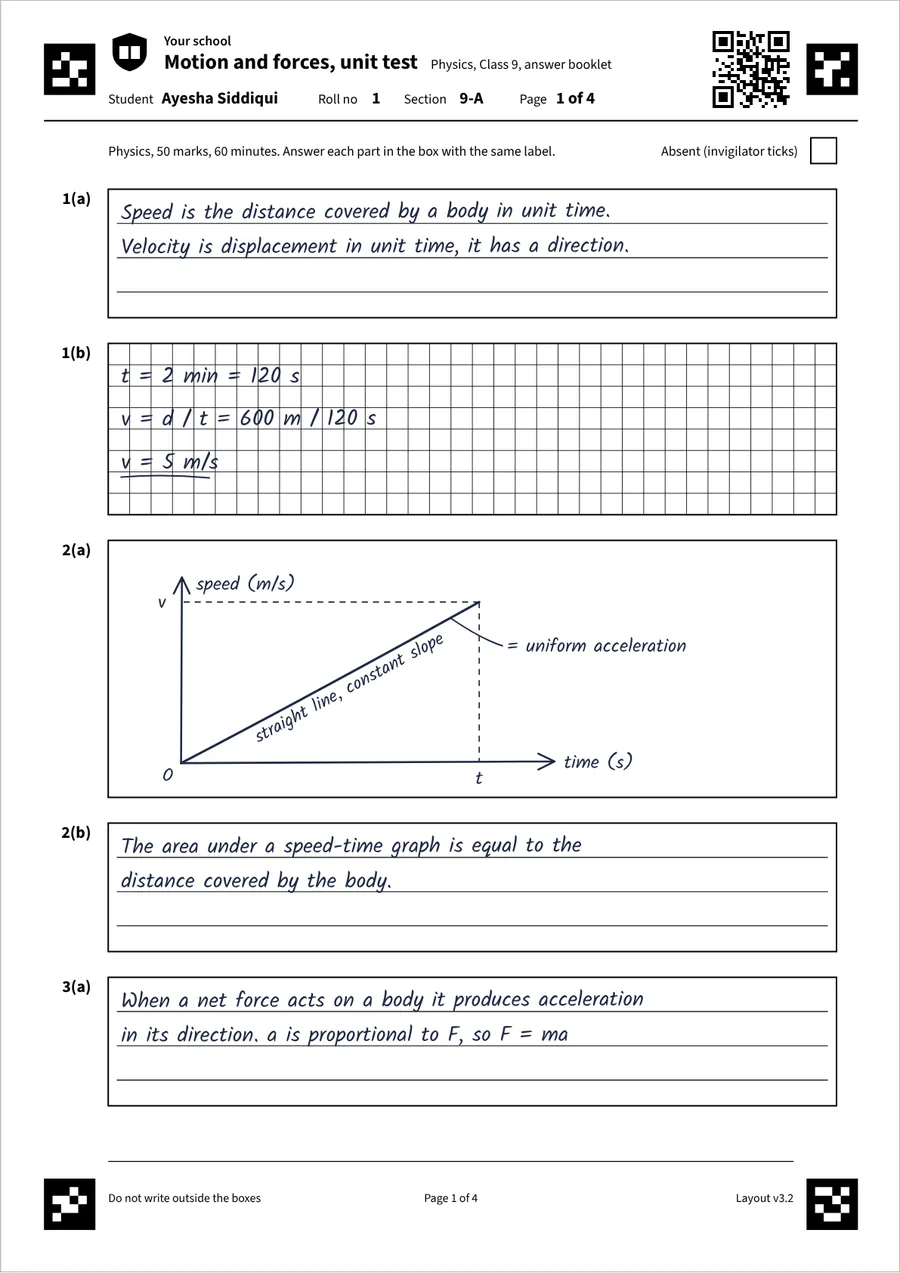
Each student gets their own answer booklet. Every page carries a QR code that says whose page it is, and four black corner markers that let LMS straighten a crooked photo.
Answer boxes sit in fixed places, so each answer can be cut out and read on its own. Booklets print on any school printer, and spare booklets cover students who join late.
You can also print one question paper with a separate answer booklet, or a bubble sheet for multiple choice.
Step 2: Photos from any phone, or a PDF from the copier
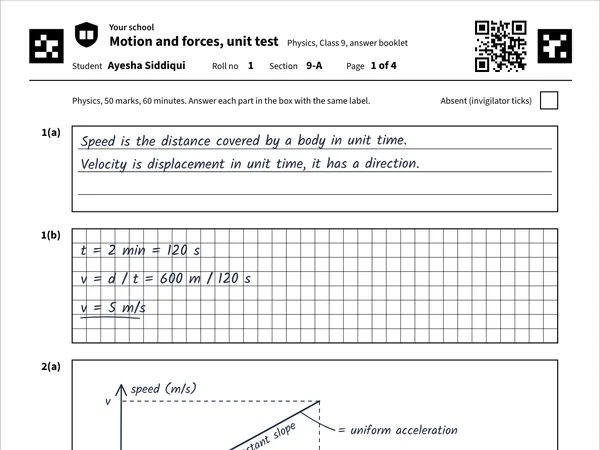
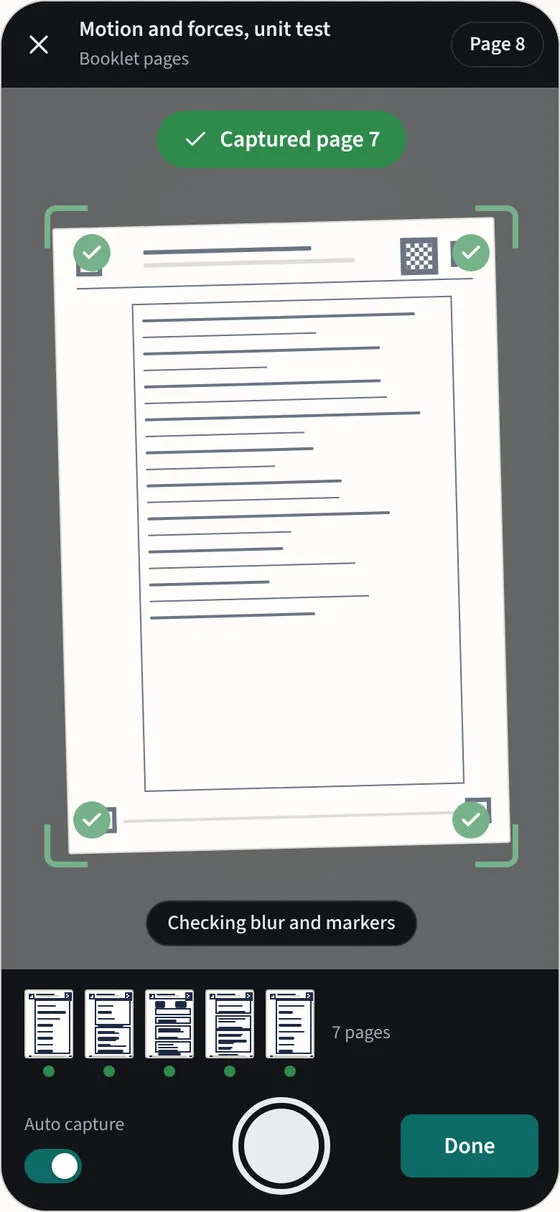
Teachers photograph pages with the camera in LMS. It takes the picture by itself once it can see all four corner markers, and asks you to move closer or hold steady when it cannot.
Marking a whole year group? Put the pages through the school copier and upload the PDF. Pages can arrive in any order, in any mix of students.
It all runs in the phone's browser, so there is nothing to install.
Step 3: Pages are matched automatically, and problems are easy to fix
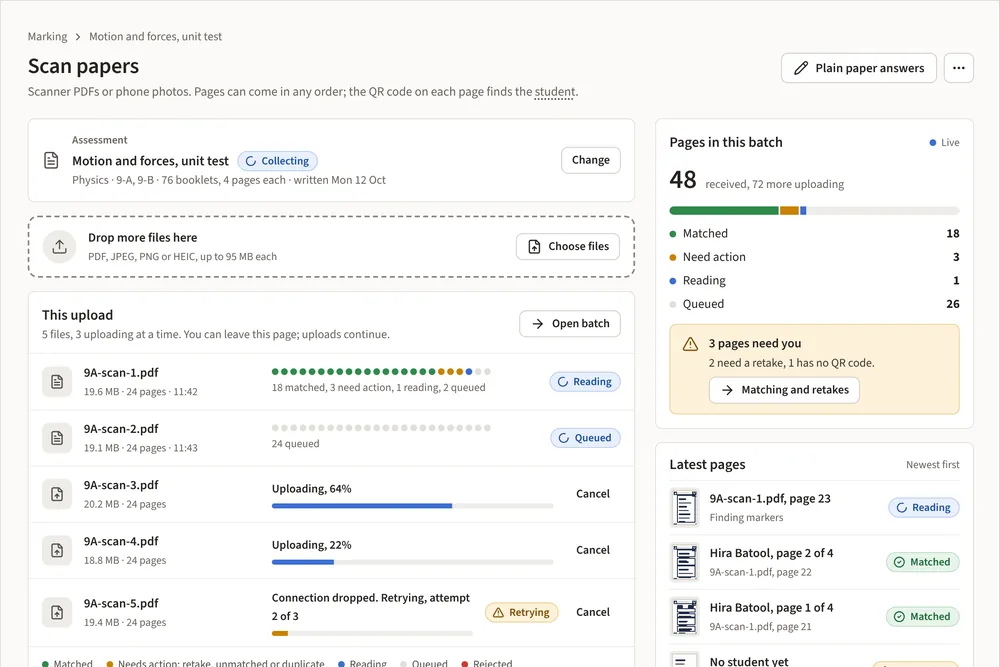
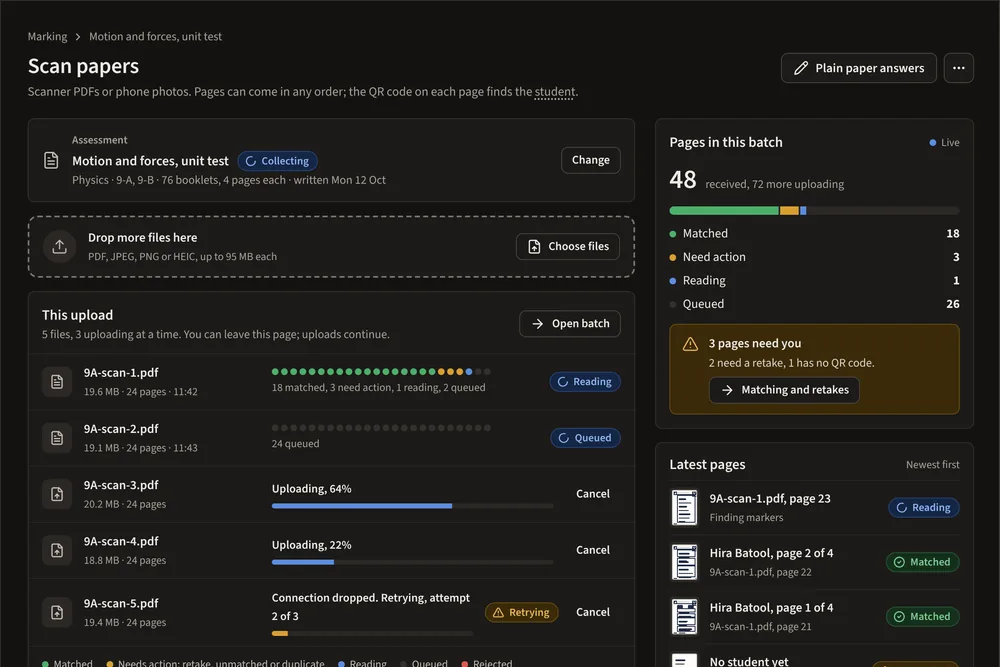
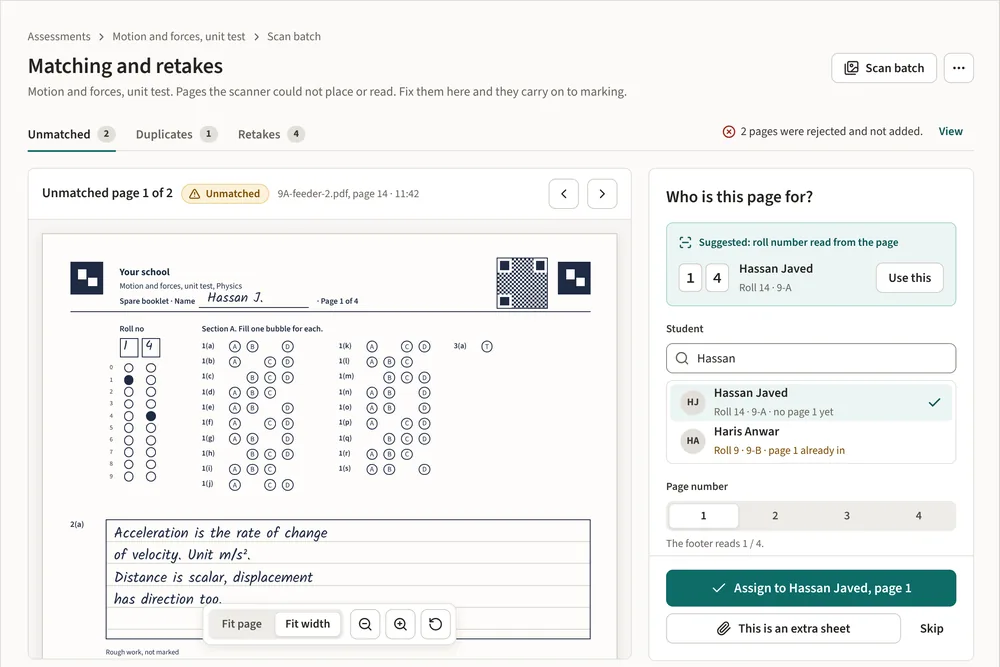
The QR code puts each page with the right student and test. A page that is blurry, too dark or missing a corner goes on a short retake list with the reason, so the teacher knows which page to photograph again.
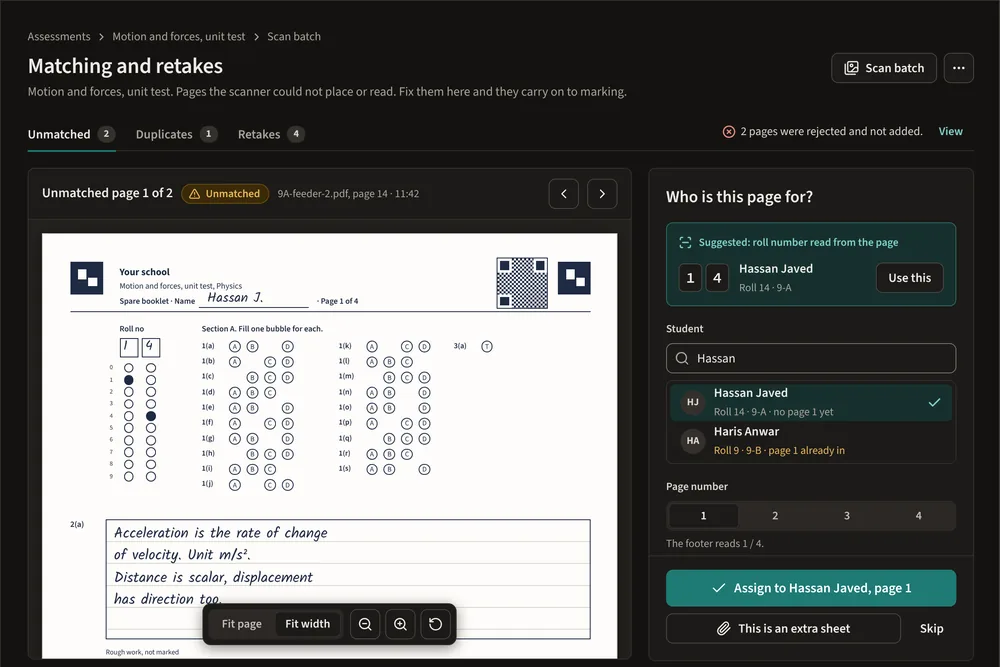
Pages without a code, such as an extra sheet, wait for the teacher to say whose they are. On spare booklets, the roll number the student filled in is offered as a suggestion; the teacher still confirms it.
A page from another class or school is refused, never filed.
Step 4: Plain paper works too
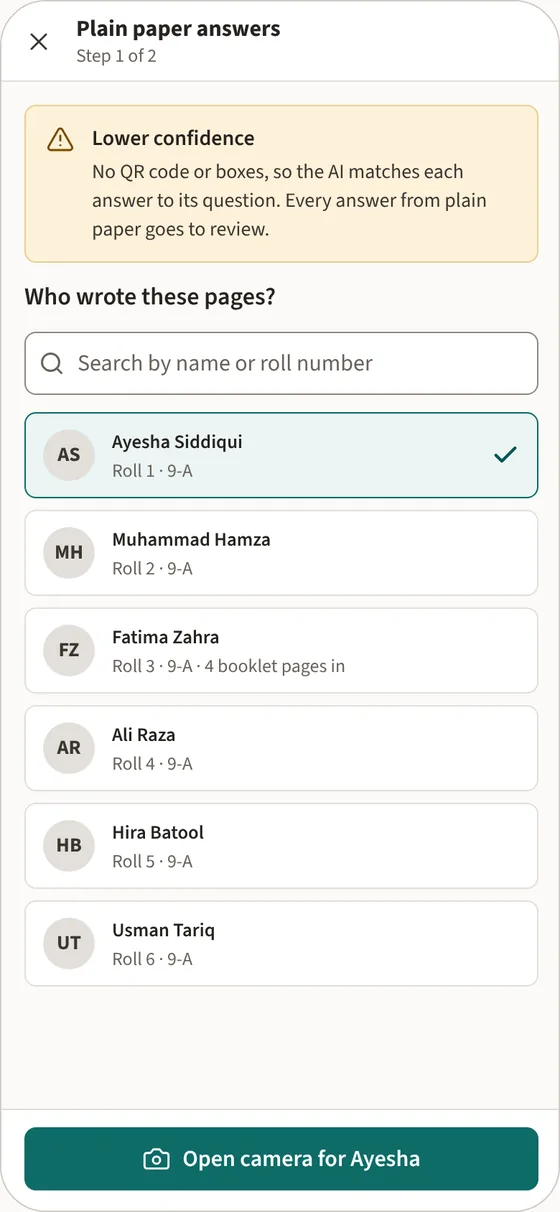
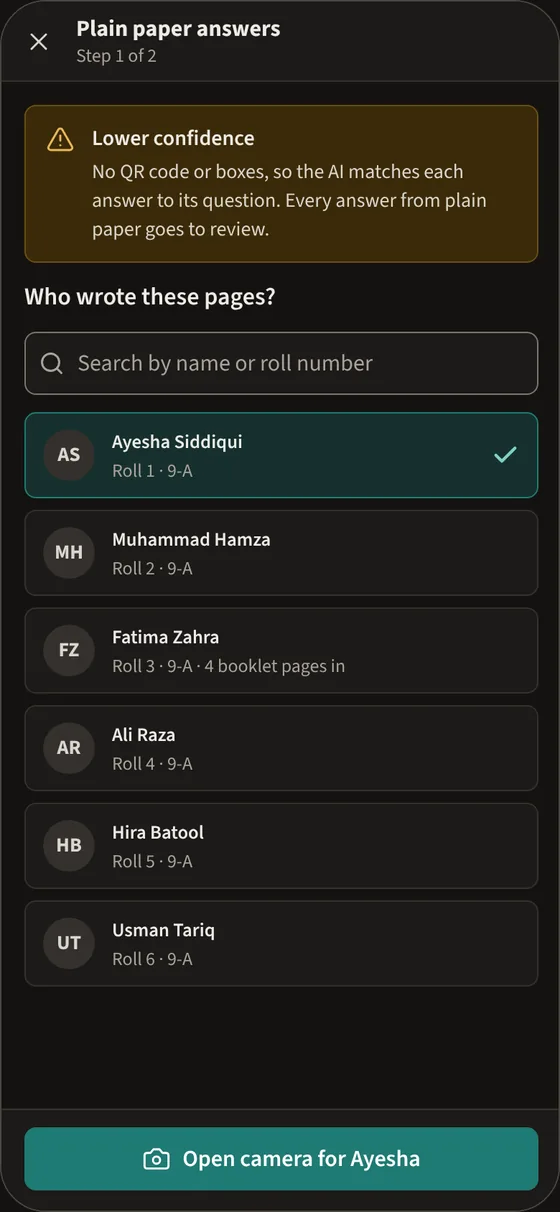
If booklets were not printed in time, students can answer on ordinary paper. The teacher picks the student, then photographs their pages, and LMS works out which answer belongs to which question.
Every answer from plain paper goes to the teacher for review. It is a fallback, so a missed print run never stops a test from being marked; booklets are faster and more accurate.
Step 5: AI reads the handwriting; the teacher decides
Multiple choice, true or false and numeric answers are marked by code as soon as a page is read. Blank answers get zero without being sent anywhere.
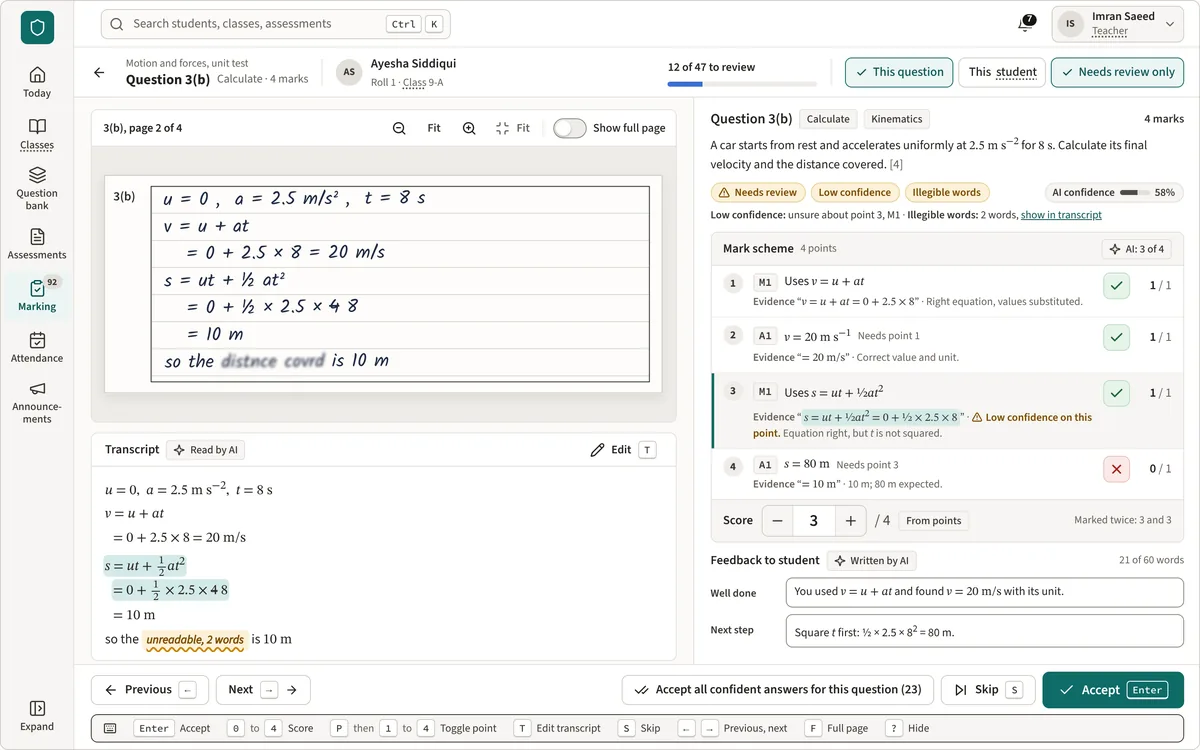
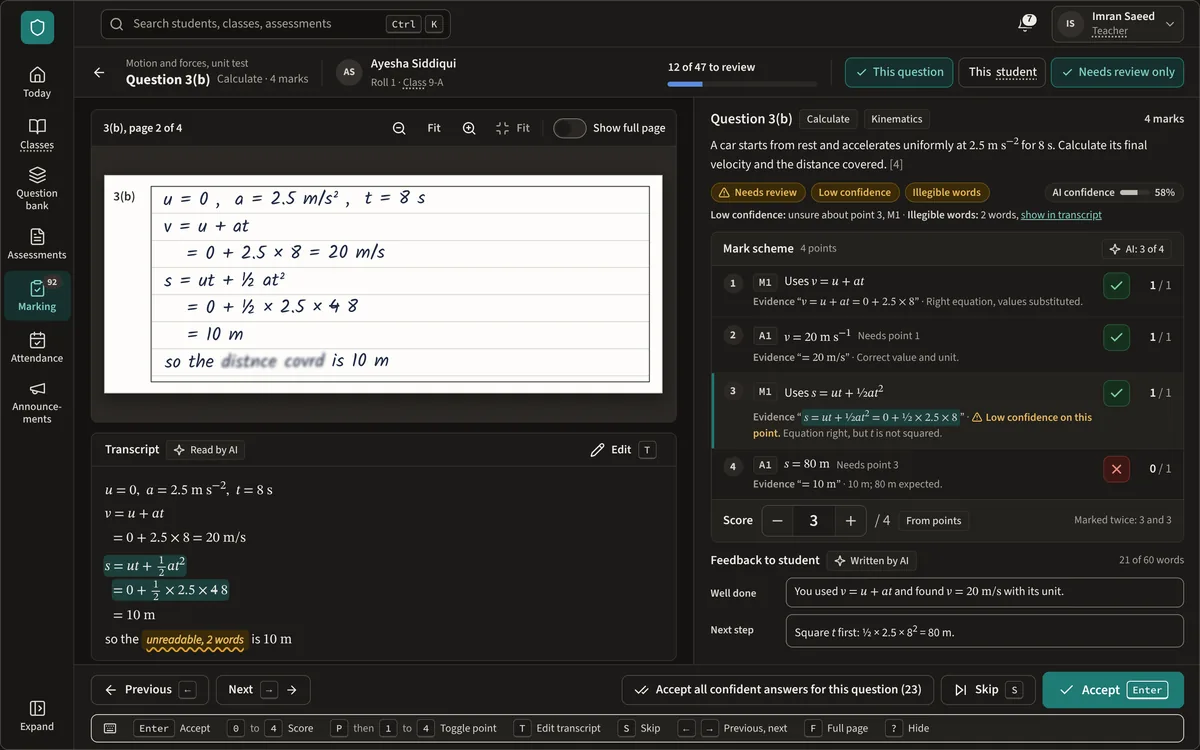
Written answers are read by a vision model, one answer at a time, with the question in view. It suggests marks against your mark scheme, point by point, and quotes the words it relied on. Longer answers are marked twice.
Anything uncertain, or close to a grade boundary, goes to the top of the teacher's review queue. The teacher accepts or changes each mark, then releases the results. Until then, students and parents see nothing.
Questions
Questions teachers ask
What if a photo is blurry?
The camera warns you before the next shot. A blurry or dark page goes on the retake list with the reason, so you know which page to photograph again. Nothing else is lost, and the page carries on to marking once it is retaken.
Can students answer on plain paper?
Yes. The teacher picks the student first, then photographs their pages. Because plain paper has no markers or answer boxes, every answer from it goes to the teacher for review.
Can we mark some subjects by hand?
Yes. A subject can be set to manual marking, and a teacher can switch a single test to manual. You still get scanning, the answers side by side, the gradebook and the results, without AI marks.
What happens when the AI is unsure?
It says so. Low confidence, words it could not read, two marks that disagree and totals close to a grade boundary are all flagged, and those answers come to the teacher first. The teacher's mark is the one that counts.
Which languages can it read?
English handwriting, including maths. Urdu answers are read once that subject has passed a reading check; until then, teachers mark them.
Do we need special scanners?
No. Any phone with a camera works, and so does a PDF from the copier you already have.
See it with one of your own tests
Bring a test your school has already set, and we will take it from printed booklet to released results in the demo.